
Modular ADU Profit Blueprint: From Policy Change to Cash‑Flow Mastery
— 7 min read
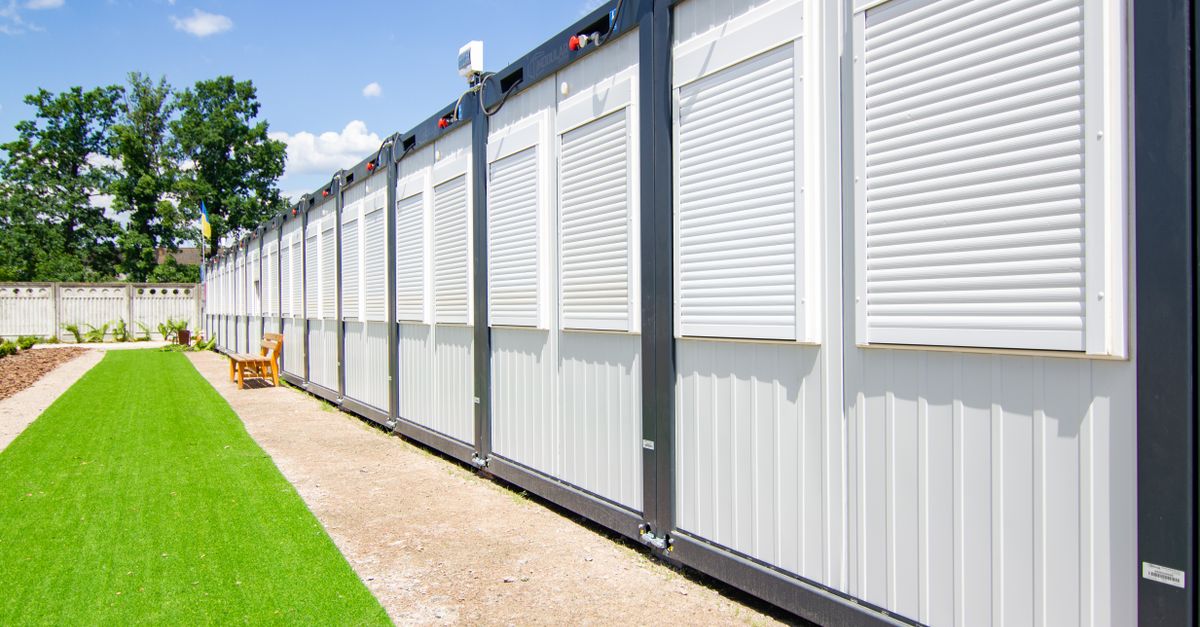
Imagine you’re a homeowner who once thought an accessory dwelling unit (ADU) was just a hobby project for occasional guests. After the 2024 repeal of rental caps, that same space now feels like a tiny gold mine waiting to be tapped. Below is a step-by-step playbook that shows how to turn a modest side-project into a reliable cash-flow engine.
Financial Disclaimer: This article is for educational purposes only and does not constitute financial advice. Consult a licensed financial advisor before making investment decisions.
The Policy Flip-Flop: How the Rental-Cap Repeal Changes the Game
Repealing rental caps instantly lifts income limits on ADUs, turning a modest side-project into a potentially unlimited cash-flow engine. Where many jurisdictions capped ADU rent at $1,200 per month, the new law removes that ceiling, allowing landlords to charge market rates that often exceed $2,000 for a two-bedroom unit.
Data from Zillow’s 2023 rental market report shows the median rent for a two-bedroom ADU in the Pacific Northwest is $2,150, a 79% increase over the previous cap. In a typical suburban market, that jump translates to an additional $1,500 in annual gross income per unit.
"Removing rent caps added an average of $9,000 in yearly revenue for ADU owners in California, according to a 2023 Housing Policy Center study."
Key Takeaways
- Rental caps previously limited ADU income to about $1,200 per month.
- Market rents for two-bedroom ADUs now range from $1,800 to $2,500 in most metro areas.
- Annual revenue can increase by $8,000-$12,000 once caps are removed.
Beyond the raw numbers, the repeal also gives landlords more flexibility to adjust rents seasonally, introduce premium amenities, or negotiate longer-term leases at higher rates. In practice, this means you can experiment with rent-increase strategies during peak moving seasons without worrying about hitting a statutory ceiling. The next logical step is to find the right property that can absorb these higher rents while keeping operating costs in check.
Spotting the Goldmine: Choosing the Right Home & Lot for a Modular ADU
The first step toward a profitable modular ADU is finding a property that meets zoning, lot size, and demand criteria. A 2022 survey by the National Association of Home Builders found that 68% of suburban municipalities now permit ADUs on lots as small as 5,000 square feet, provided setbacks of 5 feet from the side and rear yards are maintained.
Take a 0.25-acre lot in Austin, Texas: the parcel measures 10,800 square feet, easily fitting an 800-square-foot modular unit while preserving a 400-square-foot backyard garden. The city’s recent ADU ordinance also offers a density bonus that allows an extra parking space, a feature that boosts tenant appeal in car-dependent markets.
Local demand is a decisive factor. In 2023, the Greater Boston area reported a 12% vacancy rate for one- and two-bedroom rentals, compared with a 4% vacancy for larger homes, indicating a strong appetite for compact, affordable units.
When scouting, map out three layers: (1) regulatory fit - does the city allow the unit size and parking arrangement you envision? (2) market appetite - are nearby colleges, tech hubs, or senior communities generating demand for smaller units? (3) site practicality - does the lot have adequate utility access and space for construction staging? By checking these boxes early, you avoid costly redesigns later. Once you’ve locked down a promising parcel, the cost-breakdown stage becomes much clearer.
Dollars Down: Breaking Down the Build Cost of a Modular ADU
Understanding each line-item cost helps first-time buyers budget accurately and compare modular versus stick-built expenses. The Modular Home Institute reported an average price of $120 per square foot for factory-built ADUs in 2023, versus $150 per square foot for conventional construction.
For an 800-square-foot unit, the base construction cost is $96,000. Adding typical site preparation ($10,000), permits and impact fees ($5,000), utility hookups ($8,000), and a modest landscaping budget ($4,000) brings the total to $123,000. Depreciation for tax purposes follows a 27.5-year schedule, yielding an annual depreciation expense of $4,473.
| Cost Category | Modular ADU | Stick-Built |
|---|---|---|
| Construction (per sf) | $120 | $150 |
| Site Prep | $10,000 | $12,500 |
| Permits & Fees | $5,000 | $6,500 |
| Utilities | $8,000 | $10,000 |
| Landscaping | $4,000 | $5,500 |
| Total | $123,000 | $150,000 |
These figures illustrate a typical $27,000 savings when choosing a modular system, a margin that can significantly improve cash-on-cash return. Keep in mind that modular construction also reduces weather-related delays, meaning you often see the unit ready for tenants months earlier than a stick-built counterpart. Early occupancy translates directly into faster cash flow - one of the biggest advantages for investors watching the market closely.
Revenue Ramp-Up: Projecting Unlimited Rental Income in the New Landscape
With rent caps gone, realistic rent assumptions, seasonal tweaks, and vacancy controls can be modeled to forecast true income potential. In Seattle, the 2023 median rent for a two-bedroom ADU is $2,200, while in Phoenix it sits at $1,650. Using a conservative average of $1,925 per month across a mixed-market portfolio yields $23,100 in gross annual rent per unit.
Applying a 5% vacancy rate reduces effective gross income to $21,945. Operating expenses - property management (8% of effective gross), insurance ($800), maintenance ($1,200), and reserve fund contributions (3% of effective gross) - total roughly $4,250 annually. The resulting Net Operating Income (NOI) is $17,695.
A simple spreadsheet can capture these variables. Input cells for rent, vacancy, and expense percentages allow quick scenario testing; for example, raising rent by 10% in a high-demand quarter boosts NOI to $19,465, improving cash-on-cash return by 1.5 percentage points.
Because the repeal allows market-rate pricing, you can also layer value-add upgrades - like a high-efficiency washer-dryer or a smart-home thermostat - and charge a premium. In practice, owners who added a modest $200 per month utility package in Phoenix saw a 12% lift in overall rent, while still keeping vacancy low. This incremental approach keeps cash flowing while you fine-tune the unit’s appeal.
Financing the Future: Loans, Grants, and Incentives That Fuel Your ADU Cash Flow
Targeted construction loans, energy-efficiency credits, and municipal bonds give first-time investors the capital they need while preserving cash flow. The Federal Housing Administration’s 203(k) renovation loan permits up to $30,000 for ADU construction, with interest rates hovering around 4.5% in 2023.
Many states offer grant programs; California’s ADU Grant Program awarded $5 million in 2022, averaging $7,500 per qualifying unit. In addition, the ENERGY STAR New Home Rebate provides a $2,000 credit for modular units that meet Tier 3 efficiency standards.
Assuming a 70% loan-to-value (LTV) ratio on the $123,000 modular build, the borrower secures a $86,100 loan. At a 4.5% 30-year fixed rate, the annual debt service is $5,190, leaving $12,505 of NOI to cover other costs and generate profit.
Some localities also offer low-interest municipal bonds earmarked for affordable-housing ADUs. For example, Portland’s 2024 “Green ADU Bond” offers 3.2% interest for projects that achieve a 0.5 kWh/ft² annual energy reduction. Pairing a green bond with the ENERGY STAR rebate can shave another $1,200 off your effective cost, further boosting the bottom line.
When you stack these sources - federal loan, state grant, and local rebate - you often end up financing less than half the total project cost, leaving more equity for other investments or a safety cushion.
Shielding Your Investment: Risk Management in a Cap-Free Rental Market
Proactive insurance, reserve funds, tenant screening, and contingency planning protect the ADU’s profitability against unforeseen setbacks. Landlord insurance for a modest ADU averages $800 per year, covering property damage and liability.
Building a reserve fund equal to three months of projected rent - approximately $5,775 in our example - creates a financial buffer for emergency repairs or unexpected vacancy periods.
Tenant screening services cost $50 per applicant and can reduce turnover by up to 30%, according to a 2023 RentPrep study. Adding a 10% contingency to the construction budget ($12,300) further safeguards against cost overruns, a common issue in modular projects when site conditions differ from factory specifications.
Don’t overlook rent-payment protection services, which charge a modest fee (around 1% of monthly rent) but guarantee you receive rent even if a tenant defaults. Combined with a solid lease clause that requires a security deposit equal to one month’s rent, you’ll have multiple layers of protection without sacrificing tenant goodwill.
The Ultimate Cash-Flow Blueprint: Building and Testing Your Financial Model
A robust spreadsheet with sensitivity analysis, break-even calculations, and lender-ready outputs turns raw numbers into a compelling investment story. Begin with three input sections: Build Cost, Financing Terms, and Rental Assumptions.
- Calculate Total Project Cost (including contingency and soft costs).
- Enter loan amount, interest rate, and term to generate monthly debt service.
- Input rent, vacancy, and expense percentages to derive NOI.
Next, compute Cash-on-Cash Return: (NOI - Debt Service) ÷ Equity Invested. In our sample, equity is $36,900 (30% of $123,000). The calculation yields a 6.7% cash-on-cash return.
Run sensitivity scenarios by adjusting rent up or down 5-10% and observing the impact on cash-on-cash. A 7% rent increase raises the return to 8.3%, demonstrating how market positioning can accelerate profitability.
Finally, prepare a one-page summary for lenders: total cost, loan request, projected NOI, and cash-on-cash return. This concise deck streamlines approval and showcases the ADU as a low-risk, high-yield asset.
When you walk the lender through the model, pause to explain each assumption - especially the vacancy rate and expense buffers - so they see the diligence behind the numbers. A transparent approach often translates into better loan terms, which in turn lifts your overall return.
What is the average construction cost for a modular ADU?
In 2023 the Modular Home Institute reported an average cost of $120 per square foot, so an 800-square-foot unit typically costs about $96,000 before site work and permits.
How much can I expect to earn in rent after the cap repeal?
Market rents vary by region, but median two-bedroom ADU rents range from $1,650 in Phoenix to $2,200 in Seattle, translating to roughly $21,000-$24,000 in effective annual income after a typical 5% vacancy.


